
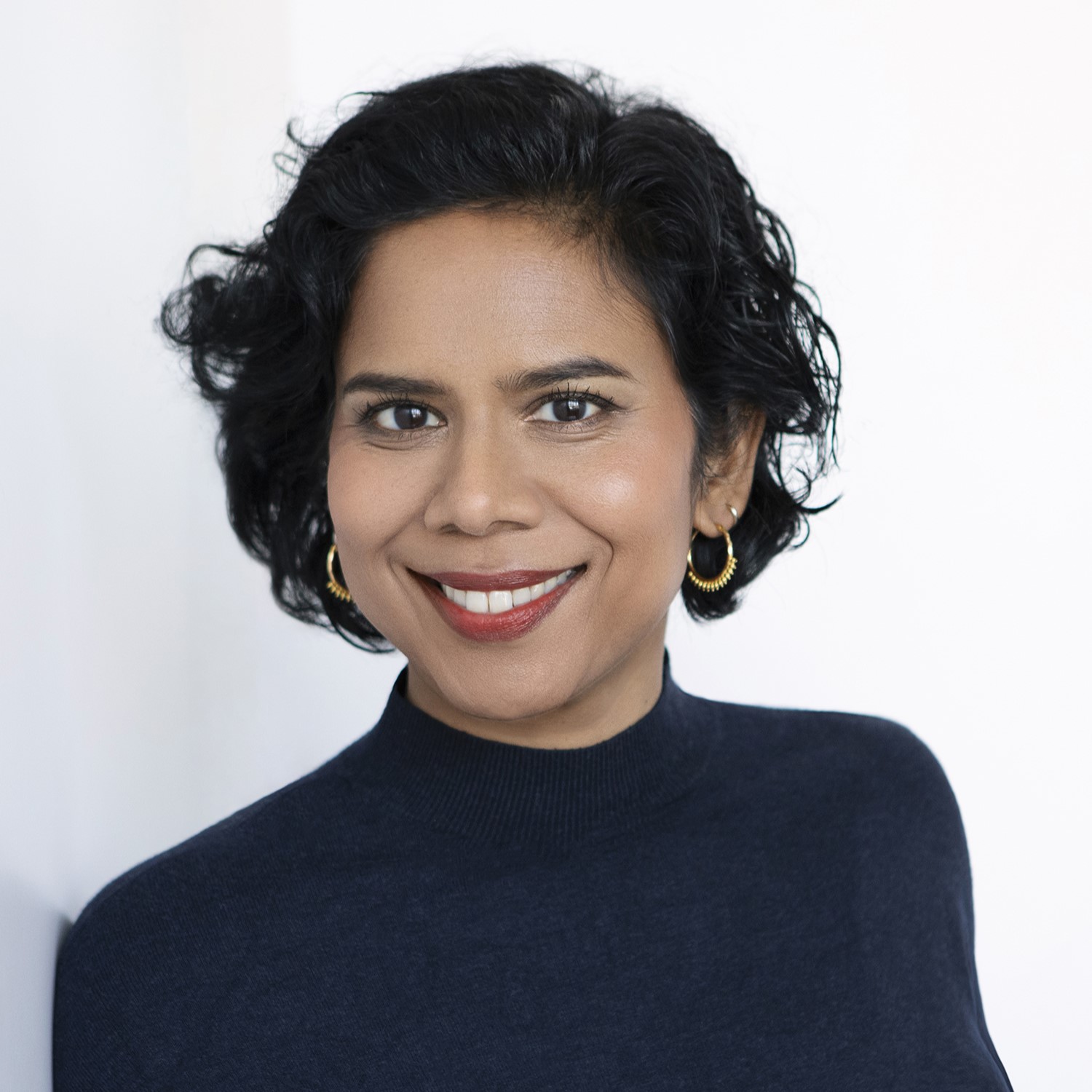
Name: Thenral Socrates
Position: Consultant Physician and Clinical Researcher
Affiliation: Medical Outpatient Clinic, Hypertension Center University Hospital Basel, Switzerland
linkedin: linkedin.com/in/thenral-socrates-a5253818
What is your role at your work?
I am an internal medicine specialist and clinical researcher based at the University Hospital in Basel, Switzerland. I currently serve as a consultant physician in the Medical Outpatient Department where I lead a dedicated clinic for women with hypertensive disorders of pregnancy and postpartum hypertension. I am the Principal Investigator of the Swiss Postpartum Hypertension (PPHT) Registry, a national cohort study focused on improving care for women affected by hypertensive disorders of pregnancy. In parallel, this autumn I will start training as a cardiology resident which I believe will be a benefit to further developing my future in hypertension, cardio-obstetrics and prevention of cardiometabolic disease processes.
How did you get interested in your career path?
I believe it's important for clinicians who strive or do research not to be discouraged by the assumption that a career path is always linear. In reality, it often evolves with experience, curiosity, and clinical exposure. In the end, you should pursue research that you feel passionate about — because that’s when you’ll do your best work because of intrinsic motivation.
Although I’ve been involved in cardiovascular research since 2008, it took me many years to truly find my calling. It happened gradually as a resident in the hypertension clinic, as I was often called to the maternity ward to assist obstetricians in managing women with difficult-to-control blood pressure during or after pregnancy. I realized what an interesting and underexplored niche this was within the field of hypertension. The field also allowed me to bridge my interests in cardiovascular disease to internal medicine, and women’s health — and to have a meaningful impact not only on women’s immediate care, but also on their long-term cardiovascular health.
What are you most proud of in your career or otherwise?
I’m proud of having built a national postpartum hypertension registry from the ground up and helping to give visibility to a neglected population of young women at risk of future cardiovascular disease. This year I was chosen to be vice-chair of the European Society of Hypertension Working Group: Hypertension in Women. This amazing community of researchers and clinicians created the ESH Consensus paper on Hypertensive Disorders in Pregnancy and is a great platform for encouraging and shaping the next generation of researchers in the field. I’m also proud of contributing to the development of the growing field of obstetric medicine in Europe, co-founding the European Society of Obstetric Medicine with Dr. Federica Piani and other like-minded colleagues to promote education and collaborative research.
On a more personal level, I’m proud that when I first moved to Switzerland — without speaking German — I made the conscious decision not to give up my dream of becoming a practicing clinician. It was incredibly difficult to learn a new language while simultaneously completing residency training in a system, language, and culture I didn’t fully understand. But perseverance always pays off. Even when you feel like you're failing, it's often still a step towards success — just on a delayed timeline. That experience taught me resilience and humility, and it shaped who I am today as a clinician, researcher and mentor.
What important career challenges have you faced and how did you overcome them?
One major challenge has been finding protected time and funding to pursue research while working clinically. I’ve learned to be creative, persistent, and to build strategic collaborations across disciplines and institutions. Balancing research, clinical care, and leadership in a new field often requires more fortitude than recognition — but it is deeply rewarding.
Another important challenge is working in environments where interpersonal dynamics play a major role. Not every professional relationship will "gel" or be harmonious — and that’s a reality we all face. Despite this, it’s essential to find ways to move forward, grow, and stay focused on your goals. In the long run, being a good person pays off — because it allows you to build trust, open new doors, and branch into unexpected directions. Growth isn’t always sequential, and sometimes the most meaningful progress comes from adapting, redirecting, and staying grounded in your values.
What advice would you give your younger self?
Don’t wait for permission — especially if you technically don’t need it. If something matters to you, start building it. Always have a multi-year plan, even if it changes along the way. It helps you stay focused and intentional.
Take a breath and learn to enjoy your accomplishments — not just move on to the next goal. Celebrate small wins; they matter.
Surround yourself with people who energize and challenge you. Find your people early — mentors, collaborators, and peers who believe in your vision. The best ideas often emerge from conversations, not guidelines.
And finally, be financially informed: understand how budgets, grants, and institutional funding work. These are not just administrative details — they’re key tools that allow you to bring your ideas to life.
Highlight your most significant research contributions and publications (3-5) - if relevant to
you.
I believe that my most significant contributions to science are yet to come…but here are a few publications that I am especially proud of.
Hotz L, Burkard T, Rana A, Wenker C, Jalanthiran S, Piattini L, Strobel N, Vorster V, Menzinger Z, Eichler S, Schumacher C, Mayr M, Dickenmann M, Hoesli I, Lapaire O, Mosimann B, Vischer S, Socrates T
Blood Pressure Control, Hypertension Phenotypes, and Albuminuria: Outcomes of a Comprehensive Postpartum Hypertension Registry
Hypertension Research March 2025 doi.org/10.1038/s41440-025-02191-2
Socrates T, Wenker C, Vischer A, Schumacher C, Pugin F, Schötzau A, Mayr M, Hösli I, Mosimann B, Lapaire O, Burkard T
Characteristics of the Basel Postpartum Hypertension Cohort (Basel-PPHT-Cohort): an Interim Analysis
Diagnostics/ 14(13), 1347/2024 doi.org.10.3390/diagnostics14131347
Thomopoulos C, Hitij JB, De Backer T, Gkaliagkousi E, Kreutz R, Lopez-Sublet M, Marketou M, Mihailidou A, Olszanecka A, Pechere-Bertschi A, Perez M, Persu A, Piani F, Socrates T, Stolarz-Skrzypek K, Cıfkova R/ Management of Hypertensive Disorders in Pregnancy: Position Statement of the European Society of Hypertension Working Group ‘Hypertension in Women’/ J Hypertens 42(7):p 1109-1132/2024.
Kozhuharov N, Goudev A, Flores D, Maeder M, Walter J, Shrestha S, Gualandro D, Oliveira M, Sabti Z, Müller B, Noveanu M, Socrates T, Ziller R, Bayés-Genis A, Sionis A, Simon P, Michou E, Gujer S, Gori T, Wenzel P, Pfister O, Conen D, Kapos I, Kobza R, Rickli H, Breidthardt T, Muenzel T, Erne P, Mueller C, Effect of a Strategy of Comprehensive Vasodilation vs Usual Care on Mortality and Heart Failure Rehospitalization Among Patients With Acute Heart Failure: The GALACTIC Randomized Clinical Trial JAMA. 2019 Dec 17;322(23):2292-2302. doi: 10.1001/jama.2019.18598.
Have you had any significant career mentors? If yes, please provide further details.
Yes — one of the most significant mentors in my career has been Professor Christian Mueller. Professor Christian Mueller gave me my first opportunity in Basel, hiring me as a postdoctoral research fellow in his cardiovascular research group. From the very beginning, he placed his trust in me — not just by offering a position, but by consistently creating opportunities, believing in my potential, and encouraging me to grow even when I wasn’t sure of the path ahead.
What makes Professor Mueller an exceptional mentor is his ability to envision your future before you can fully visualize it yourself. He has an incredible gift for guiding without dictating, and for listening with patience and intent — always making time despite his own demanding clinical and academic schedule.
He also coached me through workplace challenges in a way that was both simple and strategic — always reminding me to focus on my long-term vision rather than becoming consumed by things outside of my control. That mindset has been invaluable in helping me stay grounded, intentional, and resilient.
His mentorship has shaped my development in countless ways, not only professionally but personally. He represents the kind of mentor I aspire to be- someone who sees people not just for where they are, but for where they could go — and helps them get there.

How can we support the next generation of women scientists?
Supporting the next generation of women scientists needs to start early — ideally during the undergraduate phase or early medical school. Many young women enter medicine without understanding what an academic career truly entails — what short- and long-term goals might look like, how research can be integrated with clinical work, and the strategic choices that may be required along the way. Structured, early-career mentoring is key to demystifying this path and helping women make informed, empowered decisions.
We also need to speak openly about the realities of family planning in academic medicine — including the advantages and disadvantages of early vs. late timing and the equally valid choice to not become a parent. These are deeply personal decisions, but having honest discussions with mentors and peers — without stigma — helps normalize the diversity of paths women can take. We should embrace the idea of being open role models, sharing not only our successes, but also the struggles, failures, and detours that often lead to meaningful growth and impact.
Additionally, we need systemic and cultural mindset shifts, especially around childcare responsibilities and institutional expectations. A woman’s biology is unique and rapidly dynamic, and we should not shy away from saying so. Many women experience a surge of clarity, confidence, and professional drive in their 40s, — this trajectory can differ significantly from that of men, and we should plan for it, normalize it, and support it.
Ultimately, supporting women in science means creating flexible, realistic, and aspirational frameworks — and being courageous enough to challenge outdated assumptions about success, timing, and leadership.

