
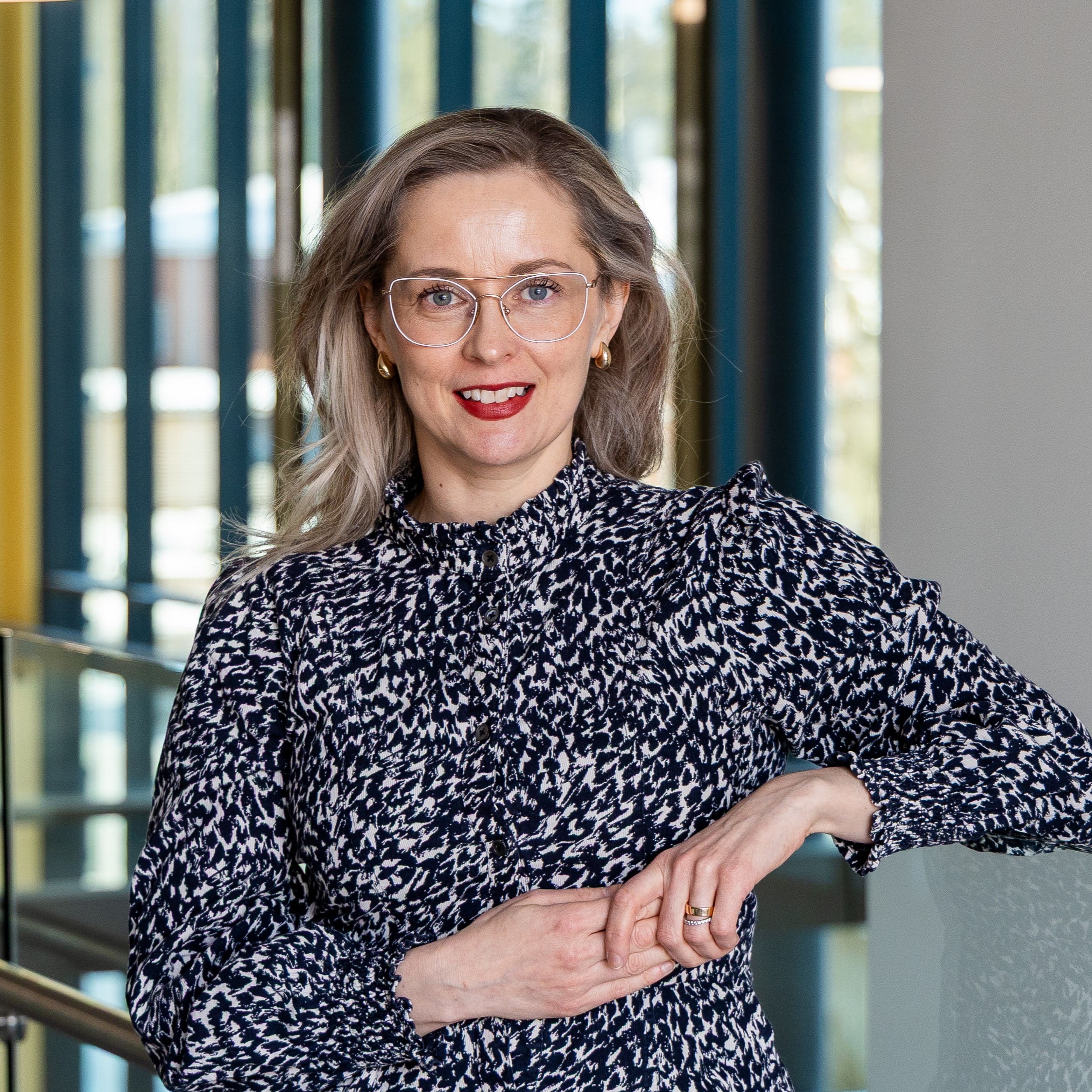
Name: Maria Hagnäs
Position: Associate Professor of General Practice
Affiliation: University of Tampere, Finland
What is your role at your work?
I am a specialist in General Practice and Associate Professor of General Practice at the Faculty of Medicine and Health Technology at Tampere University. My work combines teaching, research, and academic development, alongside a strong commitment to primary health care. I am passionate about strengthening the role of research in primary care and ensuring that clinically relevant questions arising from everyday patient care are investigated systematically.
At Tampere University, I am involved in undergraduate and postgraduate medical education, research, and the continuous development of academic general practice. I particularly enjoy working with students and early-career researchers and helping to build bridges between clinical practice and academic medicine.
Currently, I also serve as President of the Finnish Hypertension Society. The Society has been active for 37 years, and I am only the second woman to hold this position in its history. It is a privilege to contribute to advancing hypertension awareness, education, and research in Finland and Nordic countries.
How did you get interested in your career path?
My interest in research grew naturally from clinical practice. As a general practitioner, I have always been
fascinated by the complexity of patients’ lives and the wide range of health challenges encountered in
primary care. Many important questions emerged during routine consultations, and I wanted to understand
how these challenges could be addressed through scientific inquiry.
I realized early in my career that primary care provides a unique environment for research because it
reflects real-world medicine and the everyday experiences of patients. The opportunity to transform
observations from clinical practice into research questions continues to motivate me today.
What are you most proud of in your career or otherwise?
One of the achievements I am most proud of is establishing a primary care research group. Creating a
collaborative environment where clinicians can participate in research and contribute to new knowledge has
been deeply rewarding.
I am also proud of contributing to the academic development of general practice in Finland. Academic
general practice remains a relatively small field, and there are still only a limited number of associate
professors in the discipline. Supporting the growth of research capacity in primary care has been an
important part of my professional mission.
Outside my career, I am most proud of my family and the relationships I have built throughout my life. My
husband and children, and my wide circle of friends provide me with support, joy, and perspective.
What important career challenges have you faced and how did you overcome them?
One of the greatest challenges has been combining clinical work, research, teaching, and family life.
Research requires persistence and long-term commitment, while primary care is often demanding and fast-
paced. Finding time and resources for research has not always been easy.
I have overcome these challenges through collaboration, careful prioritization, and the support of
colleagues, mentors, friends, and family. I have learned that meaningful achievements rarely happen alone.
Building strong networks and working together with people who share common goals has been essential
throughout my career.
What advice would you give your younger self?
I would tell my younger self to trust the process and not be discouraged by setbacks. Research and
academic careers are marathons rather than sprints. Progress may seem slow at times, but
persistence matters.
I would also encourage myself to be confident in pursuing opportunities, even when they seem
ambitious. Curiosity, courage, and collaboration open doors that may not initially seem possible.
Highlight your most significant research contributions and publications (3-5) - if relevant to
you.
Have you had any significant career mentors?
I have been fortunate to work alongside many positive, supportive, and inspiring colleagues
throughout my career. Their encouragement and collaboration have shaped my journey in countless ways. I
would like to thank all of them for the experiences we have shared together.
How can we support the next generation of women scientists?
We need to create environments where women can thrive as researchers, leaders, and innovators.
This includes providing visible role models, effective mentorship, equitable opportunities, and
supportive professional networks.
It is also important to recognize that successful careers can be built in different ways and at different
stages of life. Flexibility, encouragement, and access to leadership opportunities are essential.
Most importantly, we should remember that science is a collective effort. By supporting,
encouraging, and celebrating each other’s successes, we can create a stronger and more inclusive
scientific community for future generations. We are here for one another.


