
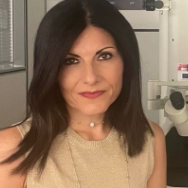
Name: Ida Perrotta
Position: Biologist and Scientific Officer, Responsible for Transmission Electron Microscopy Laboratory
Affiliation: University of Calabria – Department of Biology, Ecology and Earth Sciences, Italy
What is your role at your work?
My role involves performing detailed analyses of biological samples under various pathological or experimental conditions using transmission electron microscopy, with a specific emphasis on investigating human cardiovascular diseases at the ultrastructural level.
How did you get interested in your career path?
I became interested in my career path through a fascination with understanding biological systems at the cellular and subcellular levels. During my studies in biology, I was particularly drawn to microscopy techniques, which allow the direct observation of structures and processes that are otherwise invisible. This curiosity led me to specialize in transmission electron microscopy, where I could apply my skills to investigate human diseases, particularly cardiovascular pathologies, and contribute to advancing scientific knowledge in a precise and tangible way.
What are you most proud of in your career or otherwise?
I am most proud of my contributions to advancing the understanding of human cardiovascular diseases through high-resolution analyses using transmission electron microscopy. Leading studies on biological samples under various pathological and experimental conditions has allowed me to generate precise, reproducible data that support both scientific research and potential clinical applications. I take particular pride in combining technical expertise with scientific rigor to provide insights that can inform broader research and contribute meaningfully to the scientific community.
What important career challenges have you faced and how did you overcome them?
A major challenge in my career has been ensuring precision and reproducibility in transmission electron microscopy analyses of delicate biological samples. I addressed this through continuous training, close collaboration with colleagues, and implementing rigorous quality control, which strengthened both my technical skills and scientific confidence.
What advice would you give your younger self?
I would advise my younger self to embrace curiosity and patience, and to value persistence in mastering complex scientific techniques. Progress in research often requires meticulous effort and learning from challenges, and cultivating both resilience and a collaborative mindset early on would have accelerated my growth as a scientist and strengthened my confidence in tackling ambitious projects.
Highlight your most significant research contributions and publications (3-5) - if relevant to
you.
Have you had any significant career mentors?
Two people have played a crucial role in my career development. The first one is my husband who has consistently supported me, and I am lucky I can count on him. The second one is my Ph.D. supervisor, who has always encouraged me. I am very grateful to them.
How can we support the next generation of women scientists?
Supporting the next generation of women scientists requires creating inclusive environments that provide equal access to training, mentorship, and leadership opportunities. Encouraging early exposure to advanced scientific techniques, offering guidance on career development, and promoting visibility of female role models can empower young women to pursue and excel in scientific careers. Additionally, fostering networks and communities that address challenges specific to women in science helps build resilience, confidence, and long- term professional success.


