
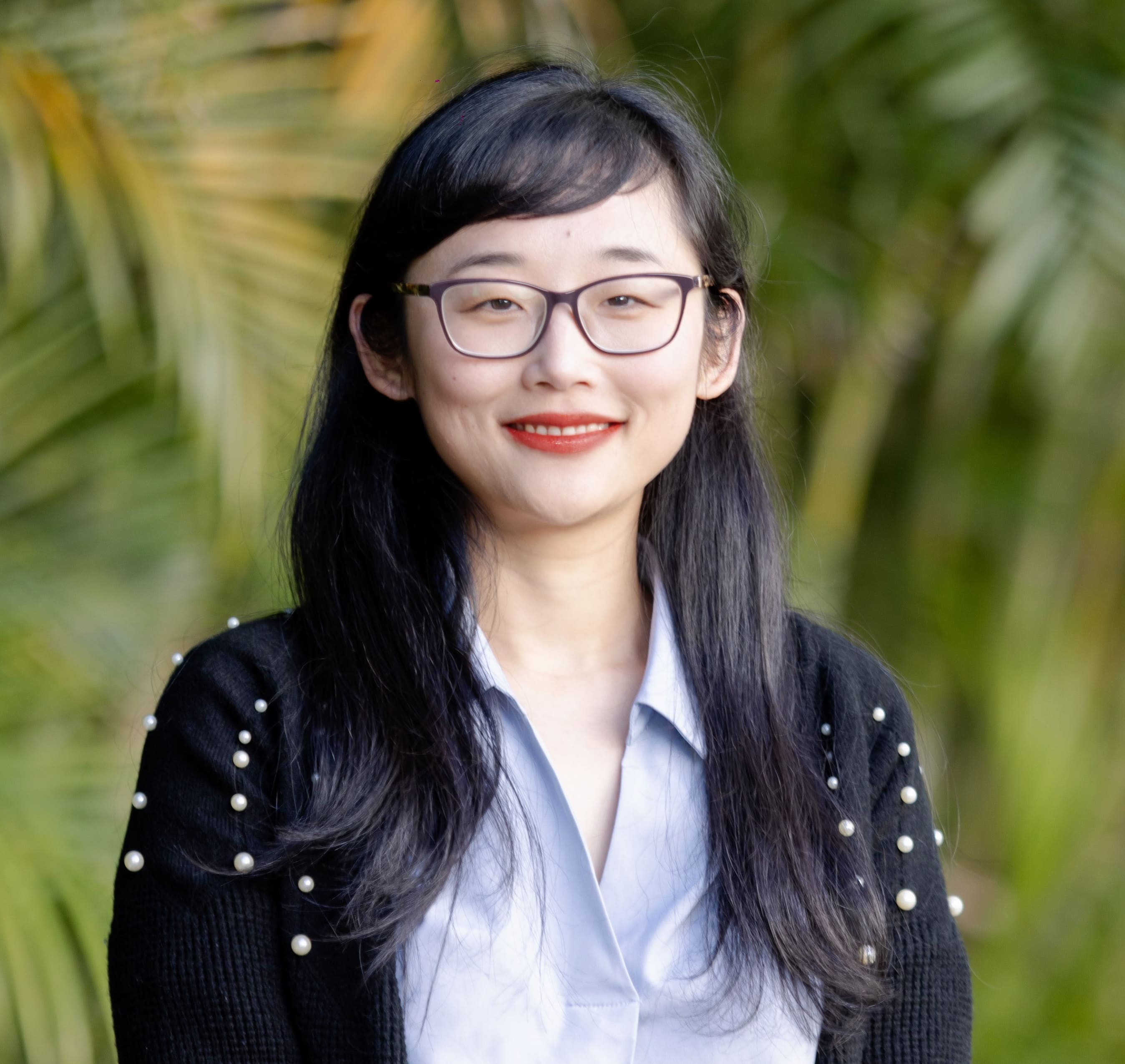
Name: Dr Xiaoyue (Luna) Xu
Position: Senior Lecturer
Affiliation: School of Population Health, University of New South Wales, Sydney, Australia
What is your role at your work?
Research in blood pressure prevention and control, and teaching in Public Health and Health Policy.
How did you get interested in your career path?
My interest in academic career path developed through training in both nursing and epidemiology. I began
my career in 2006 after completing a Bachelor of Nursing in China and later training as a nurse in the UK.
During this time, I worked closely within multidisciplinary teams, which sparked my appreciation for
collaborative approaches to improving patient care. I completed a Master of Science (Nursing) at the
University of Bedfordshire (UK) in 2011, further strengthening my clinical foundation.
In 2012, I moved to Australia and transitioned into epidemiology, motivated by a desire to address health
issues at the population level. I completed a Master of Public Health in 2013 and a PhD in Epidemiology in
2016 at the University of Newcastle. My PhD focused on reducing dietary risk factors for blood pressure
and cardiovascular disease prevention. This experience solidified my interest in blood pressure control and
reinforced the value of multidisciplinary collaboration in driving meaningful public health impact.
What are you most proud of in your career or otherwise?
What I am most proud of in my career is building a pathway that bridges clinical practice and population
health research. Beginning as a nurse and later transitioning into epidemiology allowed me to move from
caring for individual patients to advancing blood pressure control at the population level. I am particularly
proud of contributing to research that has meaningful public health impact and informs clinical guidance on
blood pressure management.
I am also very proud of supporting the next generation. Mentoring early-career researchers and students,
helping them shape their career pathways, and guiding research that can make a broader impact is one of
the most rewarding aspects of my work.
What important career challenges have you faced and how did you overcome them?
One of the most significant challenges I have faced is securing consistent grant funding to sustain my
research program. Maintaining funding continuity is an ongoing challenge in academia, and I recognise that
this is a common experience for many researchers. I would not say I have “overcome” it; rather, I have
learned to navigate it strategically. To address this challenge, I have diversified my funding applications,
seeking support from a range of schemes and partners to build a sustainable research pipeline. I have also
strengthened collaborations and aligned my work with national and international priorities to enhance
competitiveness.
What advice would you give your younger self?
I would tell my younger self to be more strategic in planning my career pathway and to actively build and
expand my professional network as early as possible.
Highlight your most significant research contributions and publications (3-5) - if relevant to
you.
My research contributions focus on two main areas: (1) nutritional epidemiology for blood pressure control
and cardiovascular disease prevention, and (2) advocacy for switching to potassium-enriched salt to
improve blood pressure control.
Have you had any significant career mentors?
Yes. Prof. John Hall was my PhD mentor and played a pivotal role in shaping my transition into
epidemiology. He provided invaluable guidance on career development and consistently supported both my
professional and personal growth.
Prof. Alta Schutte has also been an important mentor, guiding me to focus my research on blood pressure
control. As an outstanding female scientist, she has offered insightful advice on advancing my academic
career while maintaining a healthy balance between work and life.
I am truly grateful to have had such mentors in my life.
How can we support the next generation of women scientists?
I believe ISH has made strong progress in supporting the next generation of women scientists, particularly
through initiatives such as webinar series and mentoring programs that foster professional growth and
networking. To further strengthen this support, additional targeted funding opportunities for women
scientists would be valuable, especially those designed to help them establish and lead independent
research programs.


