
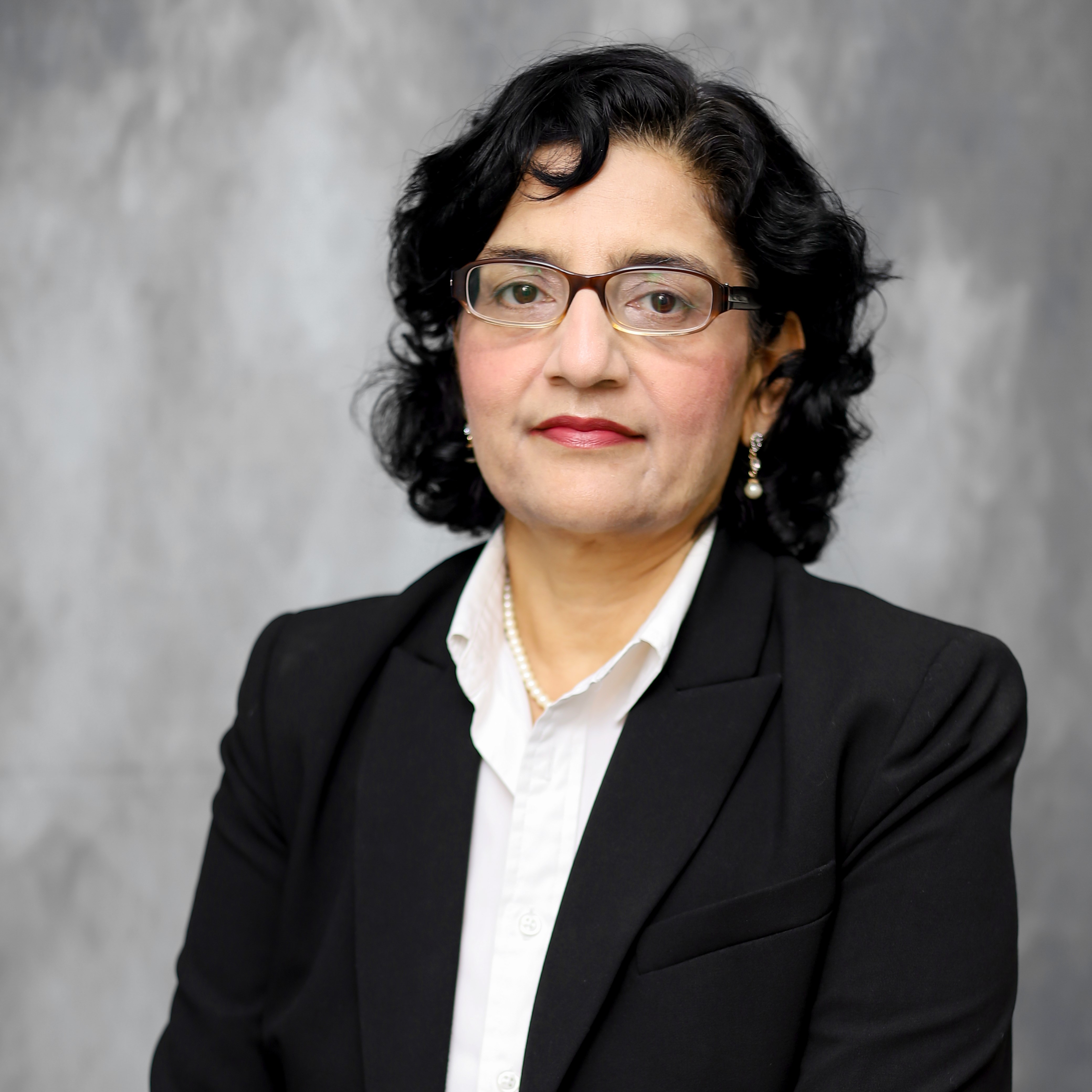
Name: Azra Mahmud
Position: Professor & Head of Clinical Research/Consultant Internal Medicine & Hypertension
Affiliation: Shalamar Institute of Health Sciences, Lahore, Pakistan
Linkedin: https://www.linkedin.com/in/azra-mahmud-86296163/
Instagram: https://www.instagram.com/azramahmud/
What is your role at your work?
I wear multiple hats in my professional life, all unified by a commitment to advancing medical knowledge and
patient care. As Professor and Head of Clinical Research, I lead a team driving innovative clinical research,
developing research ecosystems and fostering a culture of inquiry. In my role as Consultant in Internal
Medicine and Hypertension, I bring evidence-based care directly to patients, translating research insights
into real-world outcomes. As an Educator in Pharmacology & Therapeutics, I guide and mentor the next
generation of physicians, helping them understand the science behind clinical decision-making.
Beyond these core roles, I serve as Chair of the institutional Research Advisory Committee, where I shape
research priorities and uphold the highest standards of scientific rigor. I also deliver the research
curriculum, ensuring students and trainees gain practical, hands-on experience in study design, analysis, and
critical appraisal. Together, these roles allow me to bridge research, education, and clinical
practice—transforming knowledge into impact for patients, students, and the wider medical community.
How did you get interested in your career path?
“I have always been fascinated by how the invisible forces of the body—like blood pressure—shape
health and disease.”
My journey into hypertension research began early in my medical career. While preparing for my first internal
medicine exam, I was introduced to clinical research and realized it was my true calling. I pursued a PhD and
trained at one of the world’s largest hypertension centers, where I became fascinated by the interplay of
physiology and hemodynamics — a perfect marriage, of physics and patient-centered medicine. Over the
years, my work has evolved from mechanistic discovery research in well-resourced centers to participatory,
community-focused studies in low-resource settings, translating evidence into real-world impact.
Today, as a senior clinician-researcher, educator, and mentor, I continue to advance hypertension research
while inspiring the next generation of women scientists to pursue meaningful, transformative work.
What are you most proud of in your career or otherwise?
I remember being eight years old when someone asked me what I wanted to be when I grew up. Without
hesitation, I said a scientist—fuelled by my admiration for Albert Einstein and a lifelong fascination with
physics. At the time, I could not have imagined that this dream would come true. Growing up in a low-
resource environment and completing my medical degree in Pakistan, pursuing a PhD and a research career
seemed almost impossible.
Yet, against all odds, I did it—delving into arterial stiffness, harmonics, and Fourier analysis —a tribute to
my love for physics and curiosity about the human body. I am proud not only for achieving this as a non-
native with no research background but for sustaining a career in hypertension research, even in places
where it was a low priority.
I am proud that my commitment to hypertension research has stood the test of time, even in settings where it
the challenges outnumbered the opportunities. I have taken research into communities and classrooms,
mentored young people, and built a hypertension legacy that combines science, education, and impact.
What important career challenges have you faced and how did you overcome them?
Early in my career, as a non-native in a foreign land, with no research background, it was difficult to be taken
seriously. It was a long drawn battle to be accepted and recognized. Also, I chose to explore arterial stiffness,
a new and emerging field, where securing funding and publishing was challenging. However, this challenge
transformed into an achievement, as my work contributed to making this research field widely accepted.
Over time, the challenges took a different form; I worked in regions where gender barriers and low
prioritization of hypertension made research even harder, if not impossible. Other challenges came with the
personal cost of standing for your work, particularly for upholding research integrity and vigour.
As Charles Mackay wrote:
You have no enemies, you say? Alas, my friend, the boast is poor;
He, who has mingled in the fray of duty that the brave endure, must have made foes!
If he has none, small is the work that he has done.
You’ve hit no traitor on the hip, you’ve dashed no cup from perjured lip,
You’ve never turned the wrong to right, you’ve been a coward in the fight.
I met these challenges with resilience, determination and most of all persistence, inspiring me to build a
career bridging science, mentorship, and meaningful impact in hypertension research.
What advice would you give your younger self?
If I could speak to my younger self, I would say: trust your worth and take risks. For too long, I
underestimated my abilities and hesitated to claim opportunities I had earned. I did not seek advocates, build
networks, or assert my contributions as boldly as I could have.
Looking back, I realize that confidence, self-advocacy, and mentorship are as essential as hard work. I
would tell my younger self to step forward, trust her instincts, and actively pursue opportunities—because
meaningful progress often comes to those who claim it. True growth, resilience, and impact are born from
action, courage, and believing in oneself.
Highlight your most significant research contributions and publications (3-5) - if relevant to
you.
Have you had any significant career mentors?
“A mentor sees your potential before you can name it; a protégé slowly grows into that vision.”
I have been fortunate to be shaped by mentors all through life. My earliest mentors were my parents, who
taught me curiosity, discipline, and the quiet courage to persist. They did not teach me research, but they
taught me how to be a researcher — patient, observant, and unafraid of hard questions.
In my professional life, my most significant mentor was the late Prof. John Feely, with whom I trained in
Dublin. He taught me not only arterial stiffness and clinical pharmacology, but how to think, how to question,
and how to stand my ground. At a time when I was a young, non-native researcher in a new country, he gave
me room to grow and a voice to speak. His belief in me became a foundation I still stand on.
There are others who have played an important role in my professional journey; I was also deeply shaped by
the mentorship of Prof. David Webb, from whom I learned the discipline of academia and the rigour of
pharmacology and therapeutics; the late Prof. Michael O’Rourke, whose humility and subtle mentorship gave
me the courage to ask endless questions about arterial stiffness and central pressures.
Over time, I have come to understand that mentorship is not merely academic supervision. It is a deeply
human relationship — built on trust, challenge, and generosity. A mentor sees your potential before you can
name it; a protégé slowly grows into that vision.
I carry the imprint of my mentors with gratitude, and I try to honour them by offering the same guidance to
the next generation of researchers. As Chair of the South and Central Asia (SACA) Regional Advisory Group
of the International Society of Hypertension, I now try to carry forward this legacy of mentorship in how I
support young colleagues navigating their own uncertain beginnings
How can we support the next generation of women scientists?
In science, too often, women are the tall poppies — visible, ambitious, and strong — and are quietly or
overtly cut down by those threatened by their light. This Tall Poppy Syndrome, rooted in bias and insecurity,
reminds us why mentorship, advocacy, and opportunity are essential.
We must create environments where women feel seen, heard, and empowered to pursue ambitious
questions. Mentorship goes beyond technical guidance — it nurtures confidence, teaches self-advocacy, and
opens doors. Providing opportunities to lead, present, and publish ensures visibility and influence. Too
often, women do not support other women; this must change.
Like red poppies rising from difficult soil, women scientists are resilient and full of life. As Marie Curie said,
“We must have perseverance and above all confidence in ourselves… we must believe that we are gifted for
something and that this thing must be attained.” By mentoring and celebrating the next generation, we ensure
their light is protected, nurtured, and allowed to shine.

Invited Speaker
Pulse of Asia Annual Meeting, Tokyo, Japan, 2010.

My PhD Years
ESH Summer School, Glasgow, Scotland, 2001

My Hypertension Team in the Present
Lahore, Pakistan, 2025

Speakers at the Preventive Cardiology Session.
30th, Saudi Heart Association Annual Meeting, 2019, Riyadh, Saudi Arabia

Dinner with Colleagues, the i24abc consortium, 2018, Athens, Greece
