
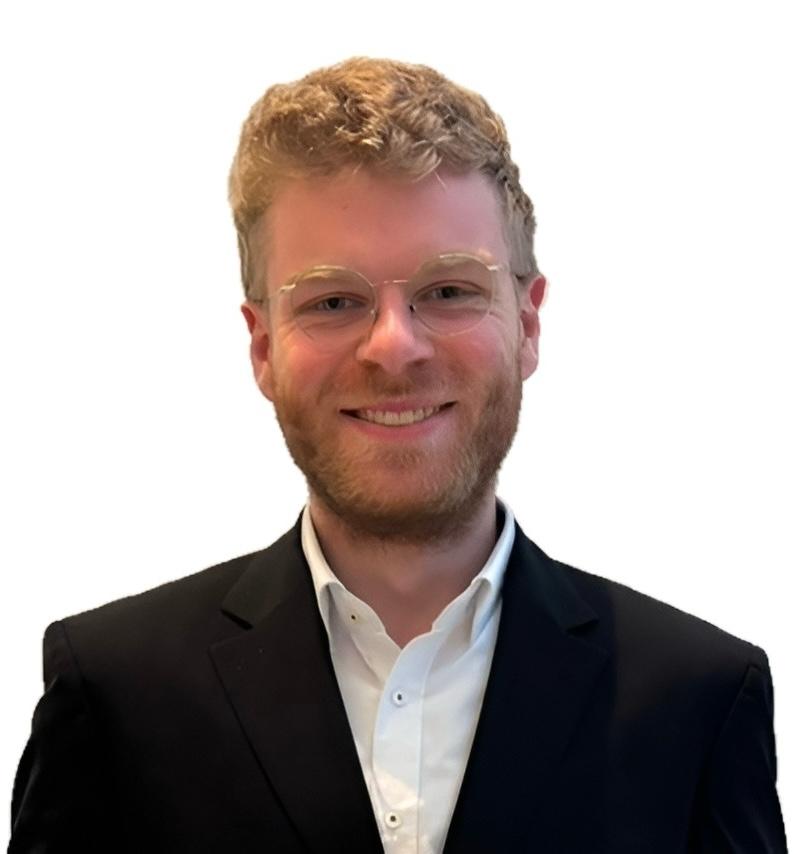
Name: Dr. Tomas L. Bothe, M.D. Ph.D.
Affiliation: Charité – Universitätsmedizin Berlin, Institute of Physiology,
Center for Space Medicine and Extreme Environments
University of Sydney, School of Health and Sciences, Faculty of
Medicine and Health
LinkedIn: https://www.linkedin.com/in/md-bothe/
ResearchGate: https://www.researchgate.net/profile/Tomas-Bothe
X: https://x.com/TLBothe
Tell us about yourself.
I am a physician researcher at the Center for Space Medicine and Extreme Environments at the Charité Berlin where I finished my combined M.D. Ph.D. degree in 2024. I am very grateful for my work which allows me to focus on exciting research, collaborate with and travel to fantastic people from all over the world, all
while enjoying the amazing cultural life in Berlin. 2025 is an exciting year for me as it marks my full transition from M.D. Ph.D. student towards an independent research career. I’m looking forward to continuing to work in the intersection of human spaceflight and cardiovascular medicine.
What are your research interests?
My research interests are in the intersection between applied extreme environment physiology and cardiovascular medicine. Extreme environments force us to think creatively about the different physiological states humans can be in and how we can best address them. From there, I work on spin-in and spin-out research and technologies that can help patients on Earth and push our final frontiers.
What are you working on right now?
My team and I are currently working in multiple spaceflight related projects, including two ongoing studies aboard the International Space Station. Beyond, we are running Earth-bound spaceflight analogue and spaceflight mirror studies to better understand the changes to the human body in space and to develop and evaluate better countermeasures. In addition, I am working on translating these insights into clinical medicine. The impact of this approach is apparent as recently shown by our work on the effect on hydrostatic pressure on blood pressure measurement – a concept unduly neglected in hypertension but everyday business for microgravity researchers.
What do you hope to achieve in the field of hypertension over the next 5 years?
My wish is to push the field a bit further outside of its comfort zone. We have been telling stories about targeted, personalised hypertension medicine for over a decade now. When assessing the available data honestly, especially on the measurement accuracy of available blood pressure monitoring technologies, this sounds like a euphemism. I am convinced that we can do better – we have even already lined out potential steps towards it. Once we are at a stage where diagnosis and treatment monitoring are accurate on the single-subject level, personalised medicine is possible. This will enable better clinical management and will hopefully also go a long way in fostering patient adherence.
What challenges have you faced in your career to date?.
There have been quite a few substantial challenges – beginning with starting a scientific career during Covid and then finishing medical school and a Ph.D. degree without any extra time. Now, working in an intersectional field always comes with drawbacks. Being a medical doctor, a physiologist, a hypertension researcher, and a spaceflight scientist is wonderful, but there certainly is the constant need to explain what exactly it is we are doing and why anyone should fund that over “pure” single- subject science. This is especially challenging in times in which Germany did not have a functioning government (or budget) for more than 6 months and in which the US American leadership (spaceflight) have greatly altered their stance o international collaboration and science in general.
Which of your publications are you proudest of and why?
This question feels like having to name your favourite child – however, there are two papers that stand out for me.
1. Our paper on the agreement of simultaneous ABPM measurement on the left and right arm in J Hypertens (10.1097/HJH.0000000000003632). This study has substantially changed my view on the state of hypertension diagnostics and monitoring. Further, it was the methodologically most challenging study I have conducted so far (beating parabolic flights…) and the relief we felt when we were sure that we had collected high-quality data was fantastic.
2. Our paper on ML enabled impedance cardiography based continuous blood pressure estimation in Acta Physiologica (10.1111/apha.14269). This paper is a secondary analysis of another study that I have conducted with my wonderful colleague and friend Dr. Niklas Pilz (Hannover). In this, we employed fully self-coded and optimised Machine Learning and Deep Learning codes. It was a great confirmation to get this paper reviewed and accepted by medical, physiological and machine learning experts.
What is your favourite manuscript from a lab other than your own?
My favourite body of work is the data generated by the Milan group of Guiseppe Mancia and Gianfranco Parati in which they evaluate cuff-based ABPM devices against ambulatory(!) 24-hour, intra-arterial blood pressure recordings using the Oxford system. (e.g., doi.org/10.1161/01.HYP.20.2.227) The works are remarkable for multiple reasons, especially because of the data quality that was recorded using an approach that could not be replicated by any standards nowadays.
What are your passions outside of work?
The older I get the more I recognise that I enjoy very simple things. I love great food, a good glass of red wine (1, of course) and spending time with close friends. I have been getting more and more into Berlin’s classical music scene and have been enjoying its amazing opera, philharmonic orchestra and ballet ensemble. Whenever the German weather allows it, I go for a run in the green. Even when it is work related, I love to travel and had the fortune to spend time at amazing places over the last few years.