
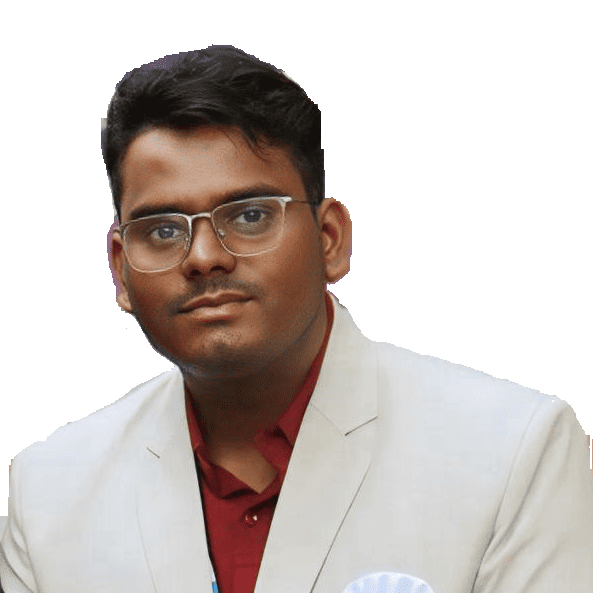
Name: Subhash Yadav
Affiliation: Ph.D. Scholar, Department of Food and Nutrition, Sunrise University, Alwar, India Clinical Dietician & Diabetes Educator
Linkedin: https://www.linkedin.com/in/dr-subhash-yadav-b76176224?trk=contact-info
Tell us about yourself.
I am a clinical dietitian and diabetes educator, currently pursuing my Ph.D. in Food and Nutrition. My interest in this field is both professional and personal, as my mother has been living with diabetes and hypertension for the past 17 years. Seeing her daily routine, dietary restrictions, and challenges with long-term management has given me a deeper understanding of patient realities. Over the last seven years, I have worked in hospitals and community settings, including rural and urban health camps, where I have seen similar struggles in many patients. These experiences have shaped my approach towards practical, sustainable nutrition interventions.
What are your research interests?
My research interests include hypertension, diabetes, obesity, and nutritional epidemiology. Through my clinical practice, I have observed high salt and sugar intake, irregular dietary patterns, and limited awareness of preventive health. These observations have driven my interest in understanding dietary behaviours and
promoting behaviour change. I am particularly interested in salt reduction strategies and lifestyle modification. I have also contributed to awareness initiatives and national campaigns focused on hypertension, which have strengthened my commitment to developing simple, culturally relevant dietary approaches.
What are you working on right now?
My current Ph.D. research focuses on the utilization of ragi (a minor millet) to develop food products aimed at addressing calcium deficiency. Alongside this, I continue working as a diabetes educator, where I observe how poor dietary habits from an early age contribute to long-term metabolic risks. My earlier work includes
research on dietary sugar intake and obesity among school children, as well as studies exploring the relationship between fast food consumption, high sodium intake, and hypertension risk in adolescents.
What do you hope to achieve in the field of hypertension over the next 5 years?
Over the next five years, I aim to contribute to the prevention and management of hypertension through practical dietary strategies, particularly focusing on salt reduction. I hope to expand my work in community-based programs and research initiatives that promote awareness and behaviour change. My goal is to develop simple, evidence-based dietary interventions that are easy to adopt in everyday life, especially within diverse Indian populations.
What challenges have you faced in your career to date?.
One of the challenges I have faced in my career is working in a field where the majority of professionals are women. As a male dietitian, especially early in my career, it was sometimes difficult to gain patient trust and acceptance, as well as recognition within clinical settings. Over time, I addressed this by focusing on strong
communication, empathy, and evidence-based practice. This experience has helped me build confidence and resilience, and has strengthened my ability to connect with diverse patient groups.
Which of your publications are you proudest of and why?
My work on the formulation and organoleptic evaluation of lotus stem fortified cookies. This study gave me practical exposure to developing nutrient-enriched food products and understanding their acceptability among consumers. It was meaningful for me because it combined both nutritional value and real-world application. Along with this, my ongoing Ph.D. work on the utilization of ragi-based food products for calcium-deficient populations is also closely aligned with my interests, as it focuses on using traditional, affordable foods to address nutritional deficiencies.
What is your favourite manuscript from a lab other than your own?
I am particularly interested in studies that explore real-world dietary behaviours in hypertension. A manuscript that stood out to me is the study on perceptions and practices of salt intake among hypertensive patients attending outpatient departments. It highlights an important gap between knowledge and practice - while many patients are aware of the risks of high salt intake, adherence to salt reduction remains low. For example, although over half of the participants had adequate knowledge, only a small proportion consistently followed recommended dietary practices. I find this work valuable as it reinforces the need for practical, behaviour- focused interventions rather than just awareness, which closely aligns with my own clinical and research interests. (Patil, Mansi & Mukherjee, Bijoya & Ching, Siew Mooi & Patil, Vishal & Dutta, Shreyashree & Patel, Datta & Varma, Shilpa & Hedaoo, Radhika & Bhattacharjee, Bijoya. (2025). Perceptions and Practices of Salt Intake Among Hypertensive Patients Attending out Patient Department. South Eastern European Journal of Public Health, XXVI, 3–5.
https://doi.org/10.70135/seejph.vi.5077)
What are your passions outside of work?
Outside of my work, I enjoy conducting health awareness sessions and interacting with people on topics related to diabetes, diet, and lifestyle. I have been actively involved in workshops and community programs, which I find very rewarding. I also enjoy mentoring students and sharing insights from my clinical experience.
Interestingly, even in casual conversations, I often find myself discussing nutrition and healthy habits - it has become a natural part of who I am. I believe this passion helps me connect better with people and make health advice more relatable and practical.