
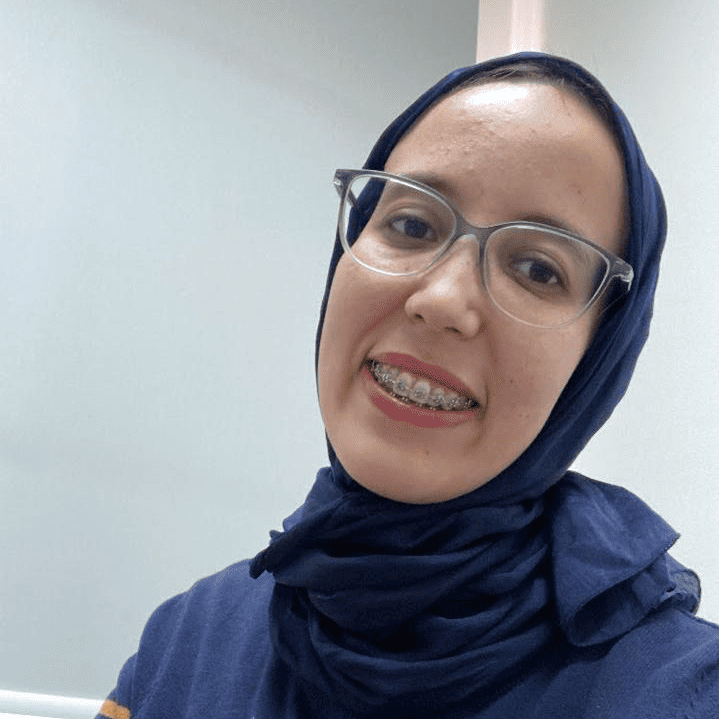
Name: Sara RAMDANI
Affiliation: Laboratory of Epidemiology, Clinical Research and Public Health, Faculty of Medicine and Pharmacy of Oujda, Mohammed First University, Oujda, Morocco
Linkedin: https://www.linkedin.com/in/sara-ramdani-380055219?utm_source=share&utm_campaign=share_via&utm_content=profile&utm_medium=ios_app
Tell us about yourself.
I am a PhD student in Life and Health Sciences at the Faculty of Medicine and Pharmacy, Mohammed First University in Oujda, Morocco. My academic background is rooted in human physiology, with a master’ specialisation in ethnopharmacology. Over the years, I have developed a strong interest in hypertension, particularly its interplay with epidemiology, social determinants, women's health, and digital health innovations. I am actively involved in both research and teaching.
What are your research interests?
My research interests lie at the intersection of hypertension, public health, and artificial intelligence. I am particularly focused on understanding the epidemiological, social determinants, and nutritional factors driving hypertension in low-resource settings, with specific attention to both the general population and women. I also explore how emerging technologies—such as mobile health (mHealth) and AI-enabled interventions—can contribute to more equitable and effective hypertension management. My recent work includes contributions to the understanding of arterial hypertension in patients with kidney disease, as well as digital innovations for managing salt intake and blood pressure.
What are you working on right now?
I am working under the supervision of Professor Intissar HADDIYA on the development of AI-based interventions for hypertension, with a focus on their acceptability and utility in Eastern Morocco. My ongoing research addresses hypertension in women and in patients with kidney diseases, while also exploring the broader social determinants that influence hypertension onset and progression. In parallel, I am co-supervising students in the Nephrology Department and co-organizing the upcoming first edition of the University Diploma program on Artificial Intelligence in Healthcare for the academic year 2025–2026.
What do you hope to achieve in the field of hypertension over the next 5 years?
I see myself actively involved in teaching and knowledge dissemination, with a strong commitment to mentoring future researchers and fostering a culture of scientific curiosity. In the coming years, I intend to establish a dynamic research platform that bridges epidemiology, data science, and community health in order to advance innovative approaches to hypertension prevention and control in low- and middle-income countries. I aim to become an active and engaged member of the hypertension research community, contributing meaningfully to scientific dialogue, collaborations, and innovation. My goal is to lead large-scale studies that address pressing public health needs and generate findings with tangible societal impact, particularly in underserved populations.
What challenges have you faced in your career to date?.
Navigating a doctoral journey without financial support has been a considerable challenge, especially when attending international scientific events and acquiring research resources. As an emerging researcher in Morocco, I face limited access to advanced training in AI and data science, fields that are central to my research. However, I have addressed these limitations by pursuing certifications in epidemiology, participating in global conferences, and proactively engaging in academic networks.
Which of your publications are you proudest of and why?
One of the publications I am most proud of is: Ramdani, S., & Haddiya, I. (2024). Updates in the management of hypertension. Annals of Medicine & Surgery, 86(6), 3514–3521 DOI: 10.1097/MS9.0000000000002052. I would say it was my first publication supervised by Professor Intissar HADDIYA. This work represents a critical step in translating evidence-based approaches into practical frameworks for hypertension management. It also marks my growing contribution to scholarly discourse on cardiovascular care in low-resource contexts and was completed during an intense academic period, reflecting my resilience and commitment.
What is your favourite manuscript from a lab other than your own?
My favourite manuscript from a lab other than my own is the landmark study by the NCD Risk Factor Collaboration (NCD-RisC), titled "Worldwide trends in hypertension prevalence and progress in treatment and control from 1990 to 2019," published in The Lancet in 2021. This global analysis of data from over 104 million people living in over 200 countries presents a review of the changing burden of hypertension and inequalities in hypertension management. I strongly appreciate the methodological rigour of the analysis, particularly the use of Bayesian hierarchical models and the implications for public health practice. It emphasises that organizational structures for health systems, political will and evidence-based strategies are much more important than wealth alone. More importantly, the paper provides a broad evidence base for the development of hypertension control policies and interventions including in low and middle-income contexts like Morocco. Finally, it highlights the significant need for cost-effective scalable solutions, which also aligns with my research area of digital health and equity-focused care. Overall, the paper highlights a great example of collaborative global research and demonstrates how data-sharing and collaborative approaches can inform international health policy and reduce global health inequities in cardiovascular health.
What are your passions outside of work?
Outside the academic setting, I am passionate about reading, particularly in the domains of science fiction and psychology, and I have a keen interest in languages—currently studying Chinese and Korean at a beginner level. I enjoy playing basketball, practicing stretching routines for well-being, and engaging in volleyball. I also take great pleasure in visiting museums, which allows me to deepen my appreciation for history and cultural heritage. In addition, I frequently participate in scientific outreach activities such as festivals and public seminars. I find great meaning in connecting with diverse communities and promoting health literacy through both formal and informal educational platforms.